The Big Picture: Understanding My Limbo

Hello, and welcome to my blog!
I’ve never considered myself to be a strong writer and couldn't have imagined starting something like this even just a few months ago. Maybe recently losing my job to layoffs had a hand in it. But instead of diving right back into the grind, I decided to set time aside to tackle something else, something that, for as long as I could remember, has held me back from cultivating my skills and hobbies beyond a certain level of mastery: my undiagnosed ADHD.
I enrolled in an online ADHD program and have been working with a coach to help me not just manage my day-to-day better, but also bring art-making back into my life without wearing myself out. This little nook I've carved out will follow the tales of an overwhelmed adventurer, navigating around art blocks and fighting off the paralysis demons strengthened by a decade of overthinking and inaction.
I'd like to kick off my first post by sharing an accurate picture of my own on-and-off journey. Since reflecting on it has helped me identify many obstacles (some I didn't even realize existed until I dug deeper), I hope that some of you reading will resonate with my experience.
The younger years
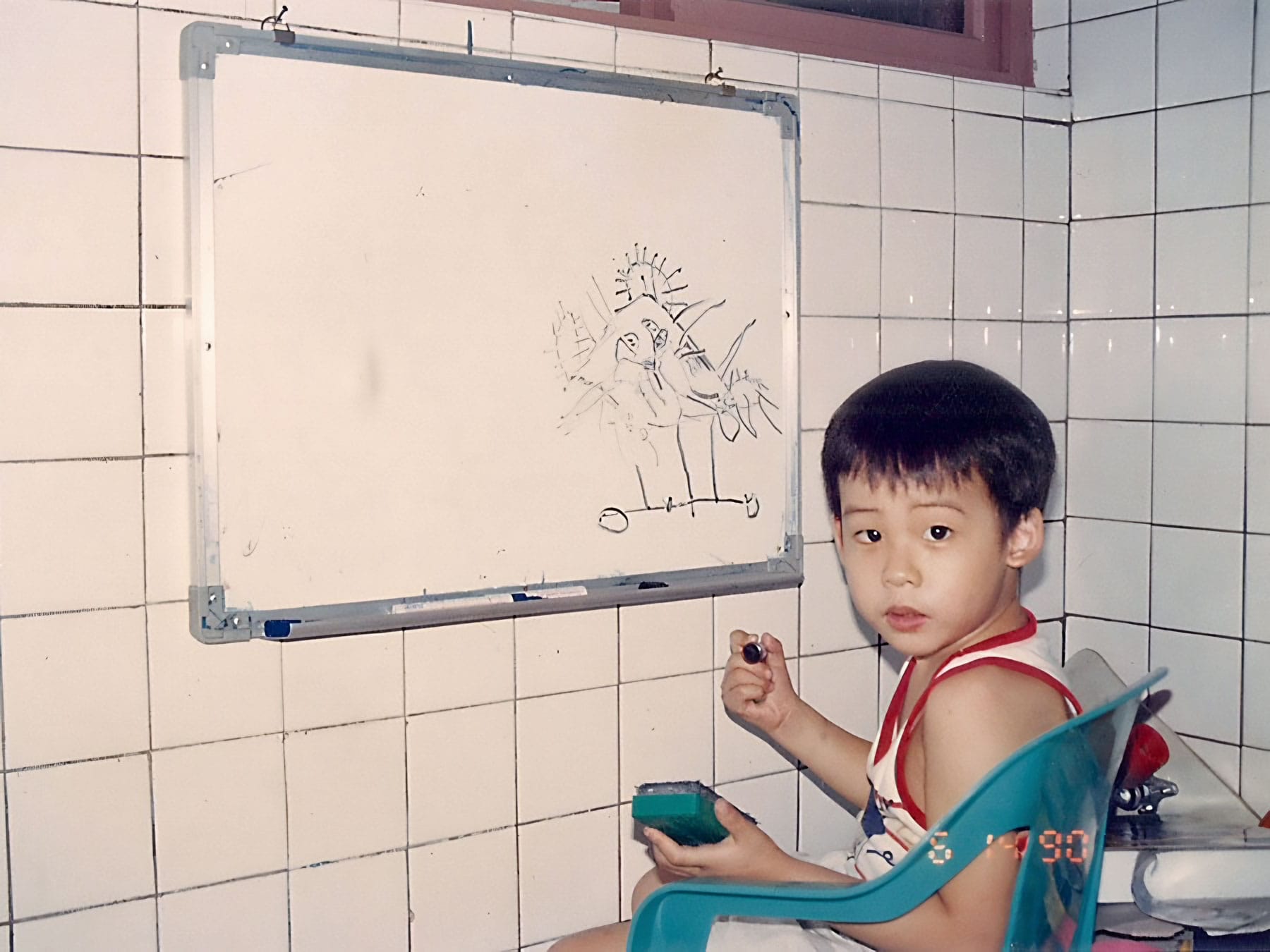
I drew a lot as a kid. Back then, I was not at all worried about doing it the "right way", because as soon as I got my hands on pencil and paper, I was in my own little world, doodling away. Drawing was my tried-and-true escape from both academia and boredom, and the compliments I received throughout my childhood and later teenage years led me to believe that I would be an S-tier artist someday.
Sadly after high school, I drew less and less. Studying design in college, I suddenly found myself floating in the same pond with many artistically-talented peers. It was during these years that I became too self-conscious to draw with others present. And because there were always people around, I stopped drawing altogether. From there, my hiatus continued on well after graduating—even when my work-life balance would have allowed for creative practice.
This isn’t to say I didn't create anything during all those following years. Sure, I was rusty after not drawing for about a decade, but if I had completely given up on making art, I wouldn't have continued to buy drawing devices and apps, or talk nonstop about all the ideas in my head. I managed to start drawing again, however inconsistently, by participating in the 2018 Inktober. And while I was proud of the art I made and rode high on the creative mojo I thought was long lost, my routine was far from sustainable. The feelings of inadequacy never left, either.
Being new to drawing once more, with years of accumulated unrealistic standards, gave me an “every line is precious” mindset. Instead of filling up my sketchbook with explorations and iterations, I started each sketch with the intent to finalize and share on social media—because it was what everyone else seemed to be doing. It also didn't help that I made my art digitally, where space is essentially infinite, and mistakes are all too easy to reverse. Sketching felt more like sculpting at that point, and I could easily clock ten hours on a single drawing. Polishing every piece of turd that came my way—no wonder I was constantly burning out. I don't remember ever lasting beyond a week during my few years of participating in Inktober.
Breaking it down
So what happened? Let's take a look.
Information overload and paralysis from social media
You'd think that surrounding yourself with amazing art all the time would inspire and motivate. For my ADHD brain, it did the exact opposite.
Around the social media influencer boom, I joined art communities on Discord and dedicated my Instagram and Reddit accounts solely to art discovery. And with those sweet, sweet algorithms locked on my preferences, I was never short on my supply of art fix. I even befriended a few professional artists, who gave good advice and offered glimpses into their processes. The problem was that their art was incredible, and mine was... well, not. Every new platform I signed up for became another space for me to pine over the skills I didn’t have. When my early attempts to scribble some ideas looked nothing like how I’d pictured them in my head, I'd convince myself that I wasn't ready to make "real" art. I believed that I needed more foundational knowledge and practice in order to not waste any of my precious ideas. Between not knowing where to start and pointlessly worrying about finding my "own style" at such an early stage, I became stuck in a perpetual cycle of frustrated attempts.
Digital distractions
The isolation of the pandemic made overindulging on things like social media, gaming, and binge-watching shows justifiable in order to stay sane. But when left unchecked for the following years, these became my top choices to receive my daily dopamine. I was aware that the endless scrolling and consumption weren't making me particularly happy, but the longer I was hooked in, the less time I had to bash myself for not drawing. All the while, I was watching internet strangers improve from the sidelines. I'd stay up late glued to screens so I can tire my brain out before I could start reflecting on my inaction. Mini-panic attacks would set up camp on nights that I couldn't fall asleep quick enough.
Fake productivity (a.k.a forever-prepping)
I've always been a sucker for organization, which is why it was so easy for me to fall into the consumer trap. With influencers constantly shoving idealized lifestyles down our throats, I diverted my attention towards gathering tools, reference images, and art tutorials that I'd rarely crack into. Instead of just sitting down and drawing something, I was fixated on the organizational mission: ensuring my virtual and physical spaces were perfect in case motivation decided to show up. Do my file management and tagging systems make sense? How can I make my tablet more accessible on my desk? What are the best hot-keys to map to my keyboard? You know—a bunch of endless side quests that made me feel productive while not leaving any room for the actual storyline.
Where I am now
These days, ADHD coaching has helped me avoid drawing until my fingers blister and my eyes stop focusing. I've also succeeded in putting a cork in all that "prepping" in the name of art. I am, however, still accustomed to those lengthy flow states from the not-so-distant past. I struggle now to draw in shorter time blocks—or do most things, for that matter. I figure, if picking up my stylus takes so much effort every time, why would I even think about setting it down before a piece is finished? After all, who knows when inspiration will strike again?
And that, friends, is what the Pens Down Project is all about: trying our best to embrace "good enough", and setting up healthier spaces for ourselves to practice art like champs.
I'm sure these struggles will feel familiar to plenty of creatives out there honing their crafts. I'm curious to hear about your personal experiences. Are we in the same boat, or did you figure out the secret sauce? If you find yourself in constant limbo, how would you like it to be different this time around?
Thanks for stopping by!
Member discussion